
Inferior
by
Book Cover & Preview Text
After the meal, We went back to the Canticle book and resumed reading it, this time by the light of the fire. Keeping in mind what Paradise had said during the meal, We tried to approach this like an assignment in the Hall of Records. Rather than simply scanning the words, We tried to internalize the words and use them to create images. Thus, slowly but surely, did the book offer up its hidden information. The account was of a human who wished to learn and study things but was instead relegated to the position of a street sweeper. As We read of its frustration We alternated between sympathy and guilt. We too understood the feeling of being denied something that gave Us joy, but at first, We were resistant. It was these same poisonous thoughts that had gotten Us into this situation in the first place. We had been poor citizens, unable to act properly for the good of the City and Our fellow humans. As the account progressed, the writer began showing preference in other ways, by sharing information only with one of its fellow humans. This was unthinkable, for every citizen serves their fellows and the City. But that wasn’t the end of it, the writer started spending time on its own in a secret underground chamber, where no one else could see it. There it experimented with basic electrical wires. We couldn’t help but feel amused when the writer spoke with such awe and wonder at creating a crude electric light. Then again, the society described in the book was exceedingly primitive. Perhaps to someone like that electricity would seem awe-inspiring. Another strange thing about the society in this book was that it seemed comprised of two types of humans. Some like the writer were called men and referred to with such pronouns as he, and him. The other kind were called women and were referred to as she or her. Some words like hers or his remained a mystery to Us. The book failed to describe how men and women were different. Instead, it simply told how the writer began to develop a preference for one of the women. A strange, irresistible preference that baffled Us. Instead of calling the woman by her number, the writer started calling her ‘Radiant’, if only in his mind. When he began to speak with her, she also gave him a designation, perhaps a name like ‘Paradise’. She called him ‘Unbroken’. As We read about the writer’s obsession with Radiant, We felt distinctly uncomfortable, yet fascinated. It seemed like these thoughts were not for Us to know about. But how could that be? Information existed for all to know. We paused in Our reading and tried to puzzle it out for several minutes, but eventually gave up and resumed. In the climactic moment of the account, the writer Unbroken’s secret was discovered and he was punished in a way that made us feel ill. Central Authority would never meet out something so. . .so. . .brutish. Whenever a Breaker of Peace was euthanized it was always quick and, so we were told, painless. To Our surprise, Unbroken remained defiant, unwilling to reveal everything he knew. Eventually, he managed to escape and fled into the wilds beyond the society in which he lived. This last was not too surprising to Us. This absurdly primitive society didn’t even have walls. Together with Radiant, Unbroken found a dwelling called a house, left over from an earlier age. Like the one Paradise lived in, the ‘house’ contained relics of that bygone age and We were just beginning to ponder the parallels when at last, a final mystery was resolved. Unbroken discovered the word I and what it meant, according to him. We reread the passage four times, remembering the times that Paradise had used it. My name is who I am. Who I am. Who I am. I. No one else. At first, We rejected it. The mere implications of that simple word went against everything We had been taught since our earliest days in the attainment center. This was a poisonous word. A selfish word. It put one above all. In the City, such a citizen would immediately be euthanized as a Breaker of the Peace. But this was not the City. This was an entirely different world. For the first time, there was a weight to those words, as if they had suddenly become solid and real. The rules of the City did not apply out here. But what about Our selfishness? Was that still a crime? If it wasn’t, then, what was it? A virtue? A simple characteristic? Long after We had come to the end of the book, long after We stopped feeding sticks to the fire and it went out, We sat in the darkness, thinking and trying to reconcile the truth behind the lies. It is hard to describe the feelings that ran through Our mind that long night. We denied the revelations. We raged at the world and everything We had once known. We wept, first with sorrow and anger, then with joy. It was as though something at the core of Our very being was shifting, altering. Something was being lost, but at the same time, something new was gained. Sleep must have crept up unawares, for suddenly it was morning and Paradise was up and had a worried look on his face. “Are you all right?” A pause. A marshaling of thoughts. Terror and elation intermingled. “Yes, We-...I...I am well.” Paradise smiled. It was a smile of understanding, as bright as the light of the new sun shining through the windows in the roof. “Good. You should get some more sleep. Tomorrow I’ll show you how to make fire.”
Formats

Book Details
About the Book
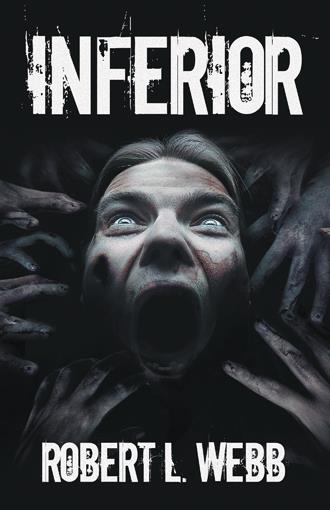
He was once known as Citizen 625-726. He had only known obedience. He had only known conformity. The City does not permit differences. The City does not permit preference. He was meant to be one among many, no different from anyone else. Then, an accident happened, and The City spat him out into the wilds beyond. There, he meets Paradise, a man who rejected The City and all it stood for. There, he finds a new name: Unbroken. There, he finds a life of freedom and self-discovery. He finds others, too—people who are not strangers nor faceless fellow citizens but friends. Life on the outside is hard, though. Each day is a struggle to survive. Yet, compared to the drudgery of The City, such a life is sheer bliss. As time goes by, the group grows, and a new society forms. Unbroken has to grapple with new feelings: love for the beautiful Jane and envy toward Paradise as he claims leadership of the band and the respect of the others. To make matters worse, The City is looking for them, determined to stamp out those who have abandoned it. Will growing tensions within Unbroken tear the group apart, or will the machines find and eliminate them first?
About the Author
Robert L. Webb has loved stories from a young age and enjoys bringing whole new worlds into being through the written word. Robert is bold and experimental, willing to look at subjects from new angles. Dystopias are about systems of oppression, and rightly so, but systems are made up of people, not just the masters but also the oppressed. Get ready for a darker, more personal dystopian horror.