
Those Few Passionate Years:
Carl E. Farris, Me and the Civil Rights Movement
by
Book Cover & Preview Text
The fourth and last time I was in King’s presence was on his birthday, January 15, 1968. We were in Andrew Young’s house in Southeast Atlanta, a fine-looking home situated on the rolling hills and green lawns of the area where the city’s elite Black population lived at the time. King was thirty-nine years old; my birthday was the same week as his. I was twenty-nine. I sat on the carpeted floor of the living room where King sat quietly. For some reason I remember that he sat alone in a comfortable chair with only me for company; but I probably remember it that way because I watched only him and blotted out everything else going on at the time. He was contemplative and aloof, like his thoughts were somewhere else. Was he aware that this would be his last birthday party? In the documentary on the Freedom Rides in 1961, news footage in the movie showed King amid harrowing scenes where people were trapped in a church with rioters outside. I noticed in those scenes that King looked like he did at the party – calm and complacent with a faraway look in his eye. Marshall Frady, in his biography of King described it as “…his peculiar mien of an almost galactic remoteness, as if the deepest center of him were lost in a secret communion with something far beyond the furors of the moment.” Dyson wrote that King at the time of his birthday had become disheartened. “Many of those who knew him then described him as …profoundly weary.” History shows what was surely evident to King in that winter of 1968, that his northern campaign in Chicago had failed. It has even been said to mark the death of the civil rights movement. People who knew King said he had premonitions of his death. Ralph Abernathy is quoted as saying that King had become a “different person” – “sad and depressed.” So, it may be that this weariness and despair was what I saw when I gazed at King in that easy chair in Andrew Young’s home on his birthday in January 1968. Whatever it was, it had been said of him frequently. It was April 4, 1968, in the late afternoon, when the news broke on television; Walter Cronkite announced that King had been assassinated. I called Carl, who was staying with Septima Clark in Charleston. They had not heard the news. Carl said he would leave for home immediately. I talked on the phone with my old friend from Chicago, Copey Davis. She came to my house from her home in College Park with some friends. She lived in a rough, mostly Black suburb south of Atlanta. We sat on the bare wood living room floor together that night, reminiscing – where we were when we first heard his name, the time he was in Chicago, the March on Washington, the Selma March that had led to my move South. King’s assassination was not a surprise. The strike and marches through Memphis by sanitation workers had stirred up a “… steady drumbeat of hatred” against them and against King. This opposition came from the police, the mayor of Memphis, the newspapers, and the FBI. Newspapers repeatedly depicted King as a communist sympathizer. Whether or not James Earl Ray was the actual assassin hardly mattered because, according to Stokely Carmichael, King “…was the number one target for every racist with a rifle, shotgun or stick of dynamite.” We remember King today as a great leader and forget that he was hated and reviled during his life which was something so obvious in the news of his participation in the garbage workers’ strike in Memphis. Since his death, a biographer wrote: “King passed into cloudy shimmers of a pop beatification, commemorated with parades, memorial concerts, schools and streets and parks named for him, his birthday a national holiday, his image on postage stamps.” One of King’s biographers, David. L., Lewis, wrote: “In the nation’s canonization of him, we have sought to remember him by forgetting him." Carl was home from Charleston by morning after the assassination. President Johnson declared a National Day of Mourning. King’s body lay in state in Sister’s Chapel at Spelman College for six days. Tens of thousands of mourners streamed toward the chapel to pay their respects. Meanwhile, even more people poured into Atlanta. The city of Atlanta mobilized for the funeral. Staff at the mental health institute where I worked joined with the rest of the city’s population to locate homes for funeral goers who needed a place to stay. A college friend of Carl’s came from Missouri to stay with us in our small guest room/study to attend the funeral. By attending the funeral, I mean that we stood outside Ebenezer Baptist Church on Auburn Avenue, while eminent guests from around the world went inside to hear the eulogies. The sounds of those eulogies came to us through loudspeakers while we stood for a long time listening. Among the mourners in the church and on the streets was an astounding presence of prominent civil rights leaders, politicians, public servants, and celebrities from the worlds of arts, entertainment, and sports. It surprised me to learn in Dorothey Cotton’s memoir that she and “fifty or sixty” others of the SCLC leadership and board of directors were locked out of the funeral due to the assemblage of eminent guests and that she went home and watched her best friend’s funeral on television. She wrote, “we were the ones who had been with him – by his side – in the midst of nonviolent battles and in the midnight hours…”. Some of the attendees inside the church included Hubert Humphrey, Vice-president of the United States and future president, Richard Nixon. Also, there were Robert Kennedy, Ted Kennedy, Jimmy Carter, Eugene McCarthy, Governors Nelson Rockefeller and George Romney, Jacqueline Kennedy, Ramsey Clark, and Justice Thurgood Marshall. Africa sent a large contingent of diplomats to the funeral each wearing the insignia reserved for those solemn occasions when a head of state has died.
Formats

Book Details
About the Book
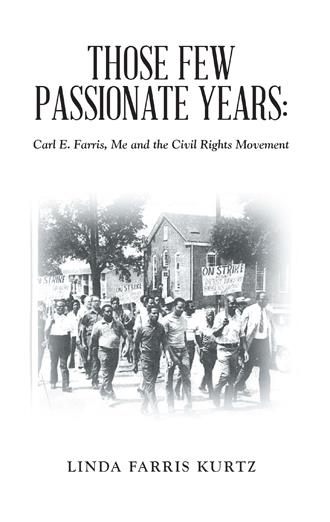
The author tells the story of her experience as a social work graduate student in Chicago who meets a civil rights worker on a picket line. The year was 1965. The two eventually marry and she moves to Atlanta where he is working with the Southern Christian Leadership Conference. The author is disappointed to find that he is seldom home, while she tries to become acclimated to living in a new city and racially mixed neighborhood. She wonders about the safety of an interracial marriage in 1960s Georgia but gradually realizes that there are people who accept her and her marriage. She slowly adapts and experiences moments of enjoyment in encounters with civil rights workers, including Martin Luther King, until his assassination. In writing this memoir she realizes that King’s assassination ends the movement even though the staff struggle to keep it going. By 1979, Carl had given up on it and joined the Amalgamated Clothing and Textile Workers Union before his untimely death due to brain cancer. Meanwhile, the author has moved on from her position as a practicing social worker to becoming a faculty member at the University of Georgia.
About the Author
The author at age 86 writes about when she met her husband in 1965, married him and moved to Atlanta where he worked with Martin Luther King in the civil rights movement. She writes about the drama of the movement just before and just after the assassination of KIng.