
The Girl from the Blue Ridge Mountains
by
Book Cover & Preview Text
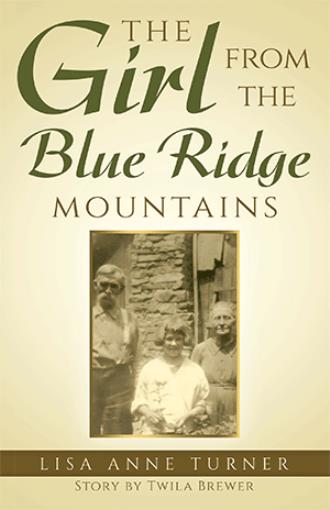
Her dress was stiff from lack of washing, frayed as a neglected, wind-beaten flag. Her hair had molded itself into a termite mound of indifference. Wafts of dandruff sporadically mizzled onto her shoulders. Her bare feet were so black they seemed permanently inked. Transplanted from her home after her mother’s death, the girl was left to fend for herself. Her father, overwhelmed and hardened by years of poverty and instability, barely regarded her. Her father’s new wife ignored her while tending to her natural children with a feathery vigilance. Unnoticed, the girl often wandered off, sometimes sleeping on the porch of the general store. Awakened by the cold, she would curl up tight, tight as a little pilled hedgehog, and shiver until the frosty darkness lulled her back into a fitful sleep. It was 1919 in Wise, Virginia, and Margaret Christine Hamilton was five years old. From Chapter 5: To George, Margaret was an enchantress, a spitfire, an angel possessed with demonly connotations, which only enhanced her dazzling yet mercurial attributes. He adored her. Or at least he was vastly entertained by an emotion he interpreted as adoration. He wanted to scoop her up as Margaret had scooped the blue bird shakers, and sequester her deep into some bottomless pocket in his coat, where no one could ever find her except himself when he needed to feel the flutter of her beautiful feathers. From Chapter 10: The sun dappled on Margaret’s face through the leaves, but it didn’t disturb her. Rather, the warmth helped to lull her. Margaret dreamt of light and shade, of dancing shadows, of blue sky and white clouds. It was a soft, meaningless dream devoid of people and their problems, and its utter frivolousness sent Margaret into a deeper, sweeter sleep. Then the dream shifted. A sensation of movement. Of heaviness. But still very pleasant. Then the sensation of water. Now this was a change. Margaret never dreamt of water. This new adventure was very interesting, quite soothing. She enjoyed this new dream very much. Then she sensed that George was holding her. How wonderful it was to be with George in this watery dream. He was up, up above her, looking down at her, and she was gliding and hovering in her watery world. But then unpleasantness began to crackle in her brain. She couldn’t make sense of it. She could feel herself beginning to struggle, though she was still asleep. And then her dream state left her, and she was suddenly, shockingly awake. She was more than a foot underwater, and George was above her, holding her down. For a brief second, she told herself she was still asleep, that she was having a nightmare. Fear clutched her, but temerity gripped her tighter. She began to struggle. She fought for her life, hitting and kicking. George was unable to hold her down and fend her off at the same time, and she wrenched free. Margaret stood up, the water up to her waist, and sucked in breaths of revitalizing air. Then she threw a powerful punch at George. He stumbled backwards, nearly tripping into the water. Margaret glanced beyond him, and saw Ella Mae safe on the sand. Then she slapped George hard on the cheek and scrambled to the shore. “Hey, it was just a joke,” George said. “I was just playing. Trying to wake you up in a funny way so I could take a swim. You’ve been napping a good hour. I’m bored.” “You tried to kill me!” “Don’t be silly. You take everything so seriously. Calm down.” Margaret grabbed Ella Mae and cradled her. She glared at George. She was terrified and furious, but her most consuming emotion was a stark bleakness so heavy it pressed on her heart like a stone. A page had turned. She knew her days with George were over. She would have to leave him. But she was shrewd enough to understand that she would have to bide her time. George would follow her and most likely would try to take Ella Mae, just to be spiteful. And she was very pregnant. So she would need to formulate a plan. She longed to return to the Bullion farm. It would be a perfect place to raise Ella Mae. But they would always be in danger if they were too close to George. From Chapter 12: Margaret and the children left the station, and they wandered until they found the main railyard. With almost no money, Margaret had decided that their only hope was to jump a train. Margaret had no idea how to jump a train. She had no notion where any of the trains were going. She wandered up and down the tracks, hoping some of the cars might be marked as to their destination. She decided she wanted to go to Phoenix. But for now, just getting west would be a good start. She held A.J. closer, one hand on the suitcase, while Ella Mae held A.J.’s diaper bag like a good girl. The tracks seemed endless with dozens of branches aligning in parallel, each track populated with train cars, their whole bounty in the hundreds. Amongst this mobile metropolis was their destiny, and she had to choose. Her choice, though made with the safest intentions given the circumstances, would nearly cost them their lives.
Formats

Book Details
About the Book
The Girl from the Blue Ridge Mountains is based on the early life of Margaret Hamilton Riggs, a Virginian neglected and abused as a child, who was rescued by her grandparents to live an impoverished but joyful life until she met her abusive husband, who tried to kill her. All of the prime characters were real people, and the major events in the book are true. Margaret was the grandmother of Lisa Anne Turner’s good friend, Twila Brewer. Turner and Brewer worked together as 911 emergency operators, often sitting side by side. Brewer assembled more than eighty pages of notes and anecdotes written by her mother, Ella Mae Riggs Lenz, about her life and the tremulous journey she and her mother Margaret; along with her little brother Andrew Jackson Riggs (aka AJ), made from Virginia to Arizona. The notes detailed Margaret’s desperate efforts to free her innocent brother from jail, her bewildering weeks-long detainment by the FBI, which erroneously thought they had snagged the girlfriend of Pretty Boy Flloyd, and her near drowning at the hands of her husband. Turner expanded from the foundation of those notes to create The Girl from the Blue Ridge Mountains; a novel built from historical facts. The Girl from the Blue Ridge Mountains is an authentic piece of Americana, showing that the bravest of us can salvage meaning from the cruelest circumstances, and survive to prosper and embrace joy.
About the Author
Lisa Anne Turner, working in partnership with her friend Twila Brewer, has created a fascinating insight on the trauma and triumph of an American woman who is forced to make the choice to leave her family to escape a man who wants to kill her. Turner has worked as a newspaper journalist, winning two awards for her stories pertaining to the Mescalero Apache Tribe and a survivor of the Bosnian War. She is a U.S. Air Force veteran and was one of the first eight women who served as operators in Minuteman II intercontinental ballistic missile silos in Montana.