
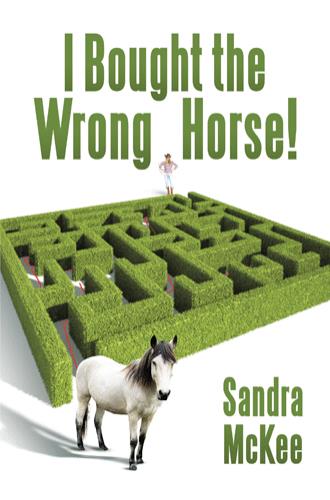
I Bought the Wrong Horse!
by
Book Cover & Preview Text
Excerpt from Chapter 7 Quirky or Problem Horses Unlike some other “wrong horse” outcomes, this type of purchase is not necessarily motivated by a desire to avoid the high prices that horses often bring or a desire to ‘save’ an unwanted horse. Vices occur in horses of all price levels, all breeds and all disciplines. Even the buyer with a reasonable budget can end up with a horse with a bothersome habit. Ignorance and deception are the two most common ways a horse with a vice is sold to someone. Ignorance on the part of the seller is possible, if the horse doesn’t show the habit. For example, weaving is a stall habit, and horses kept in the pasture would never show this; it would only appear if the horse was stalled Deception, on the other hand, occurs when the owner knows the horse has the habit, but also other redeeming qualities. So, the seller never allows the prospective buyer to see the horse do its vice. The buyer sees the horse, tries it out, likes everything about it THAT HE SAW and buys without asking all the questions. Horse buyers often they have specific requirements for the horse they want. Then they find a horse that meet those requirements; those fine qualities, however, are not always the whole story. THE DISCOVERY Before we get into this notion of horses with problems, let’s be clear. The goal in this discussion is NOT to convince novice horse owners that you can “tame” a rogue, traumatized, or clearly unbroken horse. No matter how many videos you watch or clinics you attend or “fixers” you hire, unless you are a seasoned professional, you should never take on a truly badly behaved horse. This chapter is for the novice to intermediate rider who has a pretty much suitable horse but it has a few “bugs” in its behavior. Reading this will help you determine whether you are dealing with just some rough edges in your relationship or a real mismatch. An important notion here to keep in mind: to the untrained owner, much of horse behavior is a mystery. Horses are 1200 pounds of “I just want to be with my friends and eat.” So the fact that they tolerate us at all and even agree to work for us is pretty amazing. The last thing they need is someone confusing them with inconsistent or overdone signals, or hurting them with equipment that doesn’t fit or is not familiar to them. Gaited horses are natured, trained and built differently from dressage horses. Thoroughbreds don’t come off the track trained at all---most have to be started over from scratch to be riding horses. Gentle, pet-type horses on the ground are not necessarily trained and broke riding horses. Barrel horses and trail horses have completely different backgrounds and training from each other. Each of these must be ridden in a way that meshes with what their riding experience and training have been. If you either do not know what that was or you, yourself don’t have any skill or specialized training, a mis-match is sure to occur. Before you define a horse as having a problem, be sure you have had a professional explain to you how the horse was likely trained AND what you will need to change about your own equipment and/or riding to make the situation work. The horse may have completely different signals installed than what you are giving it. Match up your signals and you may not have a problem horse at all! Here are the limits of what we will be looking at: • The differences between disconcerting, disgruntling and dangerous behaviors. • Possible sources of undesirable patterns that you can eliminate or manage. • Some suggested techniques for handling your own anxiety as well as the horse’s inconsistencies. What kind of problem is it? Here is the place we look at what a problem is and why it’s a problem. These will be discussed in more detail further along in the chapter. First we can categorize horse mis-behavior as either: Disconcerting—this unsettles the rider/handler making them anxious. To the seasoned horse person the behavior might be considered to be inconsequential, not a bother at all. But to the novice or timid owner real fear could be the reaction. Types of behaviors that fit this category— “We were just walking along and he suddenly began to trot on his own.” “I tied her up and she fidgeted and pawed.” “He just wants to follow the other horses whether I want to or not.” Disgruntling—these are disconnects between what the handler/rider wants a horse to do and what the horse actually does. Words like “disobedient”, “stubborn “ and lazy” come out of owners’ mouths when referring to these situations. Types of behaviors that fit this category— “I wanted him to follow and he just turned his head away and kept walking.” “I was leading her and she pushed ahead of me.” “I wanted to trot and all he did was keep walking.” “She keeps stopping at the gate!” Dangerous—these actions by horses could truly present a potential for injury particularly for a beginner or novice rider who may not know how to correct or prevent what the horse is doing. “When I went to get on he bucked!” “She threw her head up in the air, then took off!” “He swung his rear end around and lifted his leg to kick me!” https://www.youtube.com/shorts/TOL2wjl9xkw Following we will look at several common types of “problems”, attempt to classify them as disconcerting, disgruntling or dangerous, and offer some suggestions for getting you and your horse on the same page. Stall Habits: disconcerting Stall chewing or wood-eating can cause the horse to ingest splinters, leading to all sorts of digestive tract problems, even death. Weaving, the back and forth, rocking movement that some horses do (generally near a gate or doorway), can cause leg problems, loss of weight and lowered energy levels.
Formats

Book Details
About the Book
So you’ve bought a horse! Congratulations! What was the fantasy? Something to do with your family? A dream for a child? Maybe you just like the freedom of loading up and going for a trail ride in the woods or with friends. For some it’s a color thing: Appaloosa, Buckskin, Palomino, Paint. Or maybe you have aspirations of showing. But no matter how you look at horses, they are lovely and amazing animals to have in your life. Ultimately, though, what makes the purchase satisfying is whether it fits something in your fantasy. And often, that’s where we run into trouble. This book is provided to help when you hit that wall of “Oh no, I’ve Bought the Wrong Horse!” You bought a horse you fell in love with, and maybe it’s not going exactly as you hoped. The stories and videos here are of regular folks— not slick demos with professionals. What you can expect is straightforward guidance to help you get where you need to be as a recreational rider. You want to enjoy riding around your own property or trails, or just doing ringwork for fun and relaxation. It is my earnest wish that you find the joy with your horse that the people in this book have with theirs.
About the Author
Successful author and educator McKee shares experience of over 50 years with horses of all disciplines including 11 years training for a horse dealer. She continues to support new horse owners working through the maze of that relationship to find the treasure at the end of the journey