
MotherLand
by
Book Cover & Preview Text
Proem
Perhaps love is like a resting place
A shelter from the storm
It exists to give you comfort
It is there to keep you warm
And in those times of trouble
When you are most alone
The memory of love will bring you home
– J. Denver
Ireland and its people are often described in a series of contradictions. For example: “the land of saints and scholars,” juxtaposed with its inhabitants, the “fighting Irish.” Who hasn’t listened to Irish music without drowning in its beautiful melancholy? Lean that up against the typical manic jig, and you perfectly illustrate the paradox: contradictions cohabitate there, amicably. Perhaps it’s just both sides of the coin that is Ireland. Contrariness is woven into Irish identity, even worn as a badge of honor. My favorite description, credited to Yeats, is: “a terrible beauty.”
That’s what it is for me: a terrible beauty. So privately precious at times, I ache, trembling with the memory, the absence of it. At other times, it awakens fierce emotions of rejection and immeasurable loss. It’s precious to me in the way something forbidden becomes more so with time, as the image and dream of it grow into something of their own making, forever at odds with reality, always just out of reach.
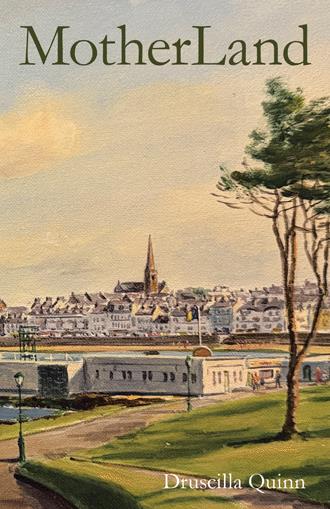
Home for me is Bangor, Northern Ireland. Whatever invisible lever turns the tide and calls starlings to gather and dance in the growing dusk, periodically tugs at the tide of my heart. My body yearns to move eastward. It’s not that I am unhappy or not at home elsewhere. It’s simply instinct. It happens irrespective of whether I can actually go. It’s indiscriminate. But whenever it occurs, the longing isn’t satisfied until I’m there. In the meantime, I try to wait patiently until airplane wheels lift off whichever tarmac I happen to be living near, and take me home.
It's a mystery, this pulling of the lever. I’d love to know what triggers it, because I don’t like being so vulnerable. Sometimes it’s physical: the slant of light falling through clouds, or the scent of rain in the air, or a howl of wind high in a night sky. I’m particularly vulnerable to the sight of wet leaves on a blacktop road, the sweet scent of newly mown grass. And then there are the emotional triggers: a melancholy song, beautifully written prose, and always, classic poetry.
Little did I know, as I left Ireland the first time as a child with a move to Texas, just how strong the umbilical pull would be. I saw it in my mother and resented her attachment. I sensed it as an affliction that weighed us all down. I wanted her to get over it, to move on. It destabilized me. I felt then that part of her had been left there. I was moving forward. But there were things I didn’t know, things my childish mind didn’t understand, that some things shouldn’t, and can’t, ever be left. I know better now.
Dramatic as it sounds, it was Irish air and light that welcomed me into this world, forming the basis of who I would become, my frame of reference. Although not a conscious memory, it’s hardwired somewhere deep. Ireland imprinted me the way a goose does her goslings, and I had neither the will nor the consciousness to resist. That would come later.
My mother imprinted me, too, though more so, of course. The slightest flicker in her expression, a lift of an eyebrow, or a turn of her lip told me exactly what was on her mind, what mood she was in. Mostly, she was incredibly loving. Occasionally, she could tend toward the mercurial. I absorbed these moods without realizing consciously how her emotions colored mine. If she was happy, I was, too; same for sad or anxious. Even loneliness reached beyond her boundaries and encroached on mine. If she was angry, I was scared. Maybe this is natural for all mothers and children. I’m vividly aware that I was issued a double dose of whatever it is that blurs those lines.
She, like the land itself, was marked by contradiction. She was independent though dependent, fierce yet fearful, confident though conflicted, a mother, and yet motherless.
Her story is as old as the hills and as common as grass. She was “illegitimate” — such a punitive word for the innocent. Suffer the little children… Though common, it’s unusual in its own way. After all, how many people in this world aren’t who they think they are? Since the beginning of time, mothers have posed as aunts, sisters, and cousins to disguise the advent of a surprise baby. Others are kicked out of the nest into the arms of fate, some cherished, some not. Oldest story in the human race: man’s inhumanity to women, the lament of the vulnerable, pain inflicted by civilization cowering under the veneer of respectability. The illegitimate, the walking wounded, are legion. This is only the story of one.
In my brain, they are inextricably linked: my mother and my country; my country, my mother. To think of one is to think of the other. To be with one is to be with the other. If one of them ceased to exist, for whatever reason, what would become of the other, as far as it related to me? This question has bounced around my subconscious and unmoored me for longer than I care to remember.
I always knew I’d have to answer it.
And then my mother died…
Formats

Book Details
About the Book
Her story is as old as the hills and common as grass. She was “illegitimate” — such a punitive word for the innocent; suffer the little children… Though common her story is unusual in its own way. After all, how many people in this world aren’t who they think they are. Since the beginning of time mothers have posed as aunts, sisters, and cousins to disguise the advent of a surprise baby. Many infants are kicked out of the nest into the arms of fate, some cherished, some not. Oldest story in the human race; man’s inhumanity to women, the lament of the vulnerable. Pain inflicted by civilization cowering under the veneer of respectability. The illegitimate, the walking wounded are legion. This is only the story of one.
In my mind they are inextricably linked, my mother and my country/my country, my mother. To think of one is to think of the other. To be with one is to be with the other. If one of them ceased to exist for whatever reason, what would become of the other as it related to me? This question has bounced around my subconscious and unmoored me for longer than I care to remember. I always knew I’d have to answer it. And then my mother died…About the Author
Druscilla Quinn’s first book, MotherLand, reflects her lifelong passion for literature and poetry. Born in Northern Ireland, she enjoys family and friends, travel, and long walks even in the rain. She and her husband live in Washington D.C.