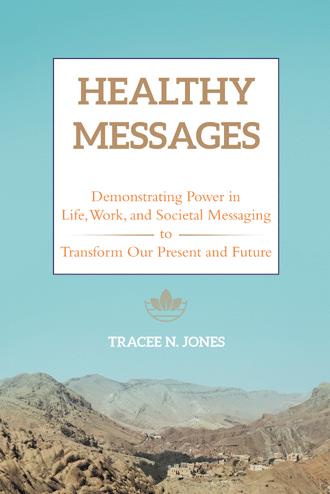
Healthy Messages
Demonstrating Power in Life, Work, and Societal Messaging to Transform Our Present and Future
by
Book Cover & Preview Text
Introduction The messages we share personally, organizationally, and societally are more than just words/actions. They reflect and shape our identity. They are active and transformative. They are powerful. There’s no better time than now (both right now in this present time and the moment in which you may be reading this book) for us to be clear on our messages and the outcomes they produce. This includes the influence of personal, professional, and organizational messaging on communities and society at large, as well as the effect of societal messaging on people personally/professionally and organizations. There’s especially no better time than now to be very thoughtful and intentional about the impact we want to have in the lives of others. As we experience ongoing changes in the world, unique voices are crucial. These voices are problem solvers, creators, producers, and thought leaders who do more than just meet pressing demands external to them. They recognize their distinct contributions as proactive difference makers in their respective spheres of influence, which comes deep from within. Unique voices are, have always been, and will forever be indispensable. ‒ ‒ ‒ Power, according to the Merriam-Webster Dictionary, and as it concerns this content, is the “ability to act or produce an effect”; “physical might”; “mental or moral efficacy”; or “control, authority, or influence over others.” It’s the latter definition of power that we often think about, and perhaps its association with money and status. We all strive for some degree of power. True power, however, cannot be measured by wealth, physical attributes, ranking, or popularity, although they may stem from it. This might seem contrary to prevailing customs, especially when we consider the appearance of power in those who possess some form of influence as we often think about it. I seek to challenge conventional thinking and practices around power and influence as it relates to genuine service—the ultimate message. Referencing the initial part of the definition previously shared (the ability to produce an effect), I would like to suggest that power consists of and is measured by one's effectiveness in messaging—the words and actions conveyed to achieve meaningful services—particularly through the lens of purpose, positioning, and presence. (While each of these words start with the letter p, they were intentionally chosen for their meaning and not to match the same first letter, although it can help to associate them as the three p’s for the purpose of this writing.) This will be explored further throughout this book under the topics of personal, organizational, and societal messaging. We’ve all experienced the impact of positive and negative messages in words and actions, the results of which either contributed to our lives for good, made situations more difficult, or if not harmful, simply didn’t add any value. What we say and do is a creative force that has the ability to establish foundations, set plans into motion, and shift directions or course correct them. This is power in action. Yet today, I would say there is an absence of power in messaging, leading to missed opportunities, mediocracy/stagnancy, or negative experiences. There are certainly exceptions we’ve all likely encountered for which I’m grateful, but I’ve largely been disappointed with messages systemically; regarding service provision, there can be a greater focus on protecting business interests at the expense of 1. others, namely those that businesses and organizations exist to serve, including its employees, clients/customers, and additional stakeholders; 2. a business’s or organization’s adherence to its mission/purpose, vision, values/principles, and culture; and 3. ultimately, its reputation for providing quality, exceptional service and its ability to achieve market success. ‒ ‒ ‒ We need a shift in messaging personally, organizationally, and societally. Consistent with this belief, consumer research to be explored further reveals that people long for more purposeful content, intentional consumption, and healthier habits overall. Considering the issues previously noted and the effect of powerful storytelling on successful branding we must ask ourselves what stories or messages actually have the most significance. I believe it’s the ones that convey important meaning and have the greatest impact on the lives of others toward positive growth and change. We all know it’s one thing to say something but entirely different to do something about it. In other words, it’s not just what you say but what you do that matters. Likewise, it is not what you intend but what you actually follow through on that counts. When used effectively, our words/actions are powerful, producing an intended action and expected outcome.
Formats

Book Details
About the Book
The need for meaningful, high-impact communication is constant, but during periods of rapid change—when both the messages themselves and the channels used to deliver them are shifting—it becomes even more essential. There’s no better time than now to be thoughtful and intentional about the impact you have on others. Healthy Messages: Demonstrating Power in Life, Work, and Societal Messaging to Transform Our Present and Future challenges conventional thinking/practices around power and influence as it relates to genuine service—the ultimate message. Combining disciplines in communication, behavioral health/social sciences, leadership, business, as well as organizational effectiveness and change, Tracee N. Jones explores how seasoned professionals, leaders, business owners, and anyone who desires to influence others can boost their impact. The author emphasizes that effective messaging is reliant on several factors, the whole or sum of its parts working together. Specific attention is given to personal (life), organizational (work), and societal (community) messaging. She also highlights how shifting toxic narratives within five prominent areas as it relates to societal/community messaging can bolster results, along with essential elements that raise standards of exceptional service.
About the Author
Tracee N. Jones is the founder of Healthy Messages LLC. Passionate about improving systems, she is a skilled business strategy and operations leader. Her experiences include implementing business transformations, advising leaders, and providing counsel to individuals navigating socioeconomic and mental health challenges. Tracee especially loves nurturing her daughter’s dreams.