
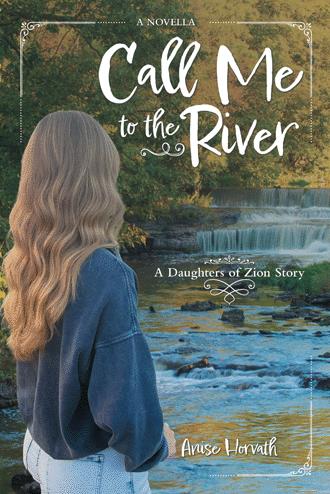
Call Me to the River
A Daughters of Zion Story A Novella
by
Book Cover & Preview Text
CHAPTER ONE – THE BOX
The morning after the funeral, the house was too quiet.
No casseroles in the oven. No murmured condolences drifting through the hall. No low hum of Gran’s voice.
Just silence.
Eden sat at the edge of the kitchen chair, staring at the wooden box in front of her. It looked out of place against the chipped surface, belonging to another time. She had found it in the back of Gran’s closet, hidden beneath blankets and a stack of old hymnals, wrapped in a faded scarf that still smelled faintly of lavender.
The box was small—no bigger than a shoebox; too heavy for something so small. Its lid was smooth, worn down by time and countless hands. Eden traced the corners with her fingertips, feeling the tiny dents where the wood had been bumped or carried from place to place.
Carved into the top was a single word: Zion.
The letters weren’t perfect—uneven but solid, carved by tired hands. The name tugged at her, a whisper of Gran’s voice calling her toward eternity. Eden brushed her fingers across the carving. The wood felt warm, alive beneath her touch. Her chest tightened. For a moment she sat still, certain that opening it would change everything.
A hundred questions crowded her mind. Why had Gran hidden it away? Why now, when the reality of loss already clung to every thought? What if the box held something that made her ache worse instead of better? She imagined closing the lid, tucking it back under the blankets, pretending it had never appeared. But she couldn’t. The name carved on top wouldn’t let her.
Before she could lift the lid, footsteps echoed down the hall. Neighbors again—returning empty dishes and offering hushed words. Eden closed the box and slid it to the side just as Mrs. Bramwell appeared.
Gran’s old friend, leaning on a cane, stepped close. The faint scent of lavender drifted from her coat, the same soft trace that clung to Gran’s scarves. Her frame was fragile; her eyes were kind, very kind. She kissed Eden’s cheek and whispered, “Your Gran loved you more than anything, child.”
She lingered only a moment, then set a small journal in Eden’s hands. “Your Gran wanted you to have this,” she said softly.
The cover was worn and smooth, the edges frayed. Eden ran her thumb across it, then closed it quickly. Not now. Not with the house full of people.
I’ll write in it tonight, she told herself, and tucked it aside.
By afternoon the day had blurred. More neighbors came and went, their faces and footsteps blending. When the last door closed and the quiet settled again, loneliness was louder than anything.
Eden carried the box to her room, holding it close. It was all she had left when all she wanted was Gran back. On her nightstand it looked small, almost ordinary. But Eden knew better. These weren’t just keepsakes. They were meant to be found one by one, at the right time.
Finally, when the house had gone quiet and her mother’s footsteps faded down the hall, Eden lifted the lid. Inside were many envelopes, stacked neatly, each one marked with the same careful script. Some had her name. Others held dates. A few were sealed, the flaps pressed tight, guarding whatever lay inside. One, sitting at the very top, was different. It was blank.
Eden took a deep breath. She pulled it out, hands trembling, and slid her finger beneath the flap. Inside was a folded piece of paper, written in Gran’s unmistakable hand:
“The Kingdom does not come all at once.
It comes like water over stone.
Be patient, Eden.
Be still and listen.”
The loops and swirls looked just like the notes Gran used to leave on the counter or tucked into Eden’s lunchbox. For an instant, Eden could almost believe she was still here.
She swallowed hard and set the letter gently back into the box.
The words were mysterious. She sat with them, certain something had already begun to change. She didn’t understand what Gran meant.
Later that night, with the box closed on her nightstand, Eden remembered the journal. She pulled it to her lap, her heart quickening as she opened to the first page.
“Sing, O Daughter of Zion; shout aloud, O Israel!
Be glad and rejoice with all your heart,
O Daughter of Jerusalem!”
— Zephaniah 3:14
Just beneath it, Gran had written two words:
Dear Zion.
Her throat tightened. Gran had started it. Eden touched the page as if it might vanish, the letters small and firm, familiar.
She lifted her pen. For a long time, she only stared. Then, in a quiet line beneath Gran’s words, she wrote:
If You really see me... show me how.
— Eden
She closed the journal and rested her palm on the cover, her breath steady.
For the first time since the funeral, she let herself hope. In the quiet, she could almost hear Gran again—faint, reassuring—whispering that Zion was only the beginning.
1 JOURNAL
THE BOX
Scripture
“Sing, O Daughter of Zion; shout aloud, O Israel!
Be glad and rejoice with all your heart,
O Daughter of Jerusalem!” (Zephaniah 3:14)
What It Means
This verse is a call to joy and identity. God names His people “Daughter of Zion,” reminding them that they belong to Him. Even in sorrow or uncertainty, He speaks over them with promises of rejoicing and restoration. The joy here isn’t shallow—it’s rooted in knowing who you are and whose you are.
Eden’s Reflection
I don’t feel like singing. Gran is gone, and the house is too quiet. But if God calls me “Daughter of Zion,” He sees something in me I can’t yet see in myself.
Reflection Questions
1. What names or labels have you answered to that were never yours?
2. How does it change your perspective to know God gives you a name and identity rooted in Him?
Prayer
Lord, even when I don’t feel joy, help me remember that You’ve called me Yours. Teach me to rejoice from the inside out—not because everything is easy, but because You are faithful and my name is written in Your heart.
Formats

Book Details
About the Book
The morning after her grandmother’s funeral, Eden Holloway finds a letter waiting in the mailbox.
There was no return address or explanation. Only a question that reaches into the deepest parts of who she believes herself to be.
As more letters and hidden messages begin surfacing, Eden is drawn into a quiet unraveling of grief, silence, and long-buried family secrets surrounding a name nearly erased by time: Miriam Rose Holloway.
With every letter, Eden is pulled deeper into the hidden pain, bitterness, and unanswered sorrow that shaped the generations before her — uncovering not only the secrets buried within her family, but the painful ways unresolved wounds can quietly alter lives, divide hearts, and steal years that can never be returned.
As the past unfolds, Eden learns to stand on the truth of God’s Word, trusting His mercy to guide her through the brokenness left behind by those she loves. But as hidden wounds and buried grief rise to the surface, Eden must also wrestle with a deeper question — how do you trust a God you cannot see when pain has shaped so much of the life around you?
Tender, atmospheric, and spiritually resonant, Call Me to the River is a coming-of-age novel about grief, forgiveness, identity, and the redemptive power of God’s truth carried through generations.
About the Author
Anise Horvath writes stories where faith meets mystery, and where forgotten wounds, hidden histories, and God’s redemptive love intersect. Drawing inspiration from Scripture, family, and the landscapes of the Gulf Coast, she explores themes of forgiveness, identity, mercy, and hope. Through her fiction, Horvath invites readers to consider not only where they have come from, but who God is calling them to become. Her work reflects a deep love for God’s truth and the enduring hope found in Christ. Call Me to the River is her debut novel.