
Turbulence Theory
A Journey Beyond Time and Consciousness
by
Book Cover & Preview Text
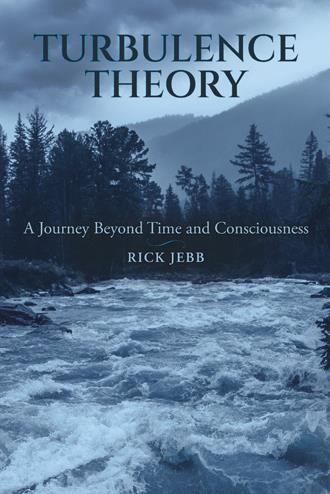
“I saw the best minds of my generation destroyed by madness, starving hysterical naked...” —Allen Ginsberg In a dream, I paddle across a black void. A deep fog drifts over the surface. I have no idea where I am, how I arrived, or where land might be. Time feels frozen. When the scene shifts toward dawn, my hopelessness dissolves. A tiny seal pup rests in the open space of my canoe, its dark coat silken, hope reflected in its wet eyes. I paddle now in rhythm toward a sunrise like no other. The faint sound of falling water draws me forward. Rooftops emerge through the mist, and soon I pull onto a gravelly beach at the mouth of a tumbling river. I lift the seal into my arms and walk toward a village of delicate Victorian houses—gingerbread forms like San Francisco’s Painted Ladies, only pure white. Villagers move between homes and small shops gathered around squares with statues honoring Norse gods unknown to me. “Excuse me,” I ask a passerby. “Can you tell me where I am?” He glances at me, shakes his head in a wordless no, and quietly moves out of sight. I ask others. The same response. The seal cries—and I wake, somehow filled with an unfathomable peace. Unc Boynton Beach Marina, late 1960. A boy is about to turn five. Hydroplanes roar; laughter and cocktails keep the grown-ups under a spell. Chrome and teak shine in the tropical sun. The ego loves the shine; the soul keeps a hand on the rail. Moored on the Intracoastal, they watch fast boats knife up from Miami toward West Palm, not seeing what’s about to happen below deck. “Perky,” Natalie Turner says, “any new Mark, Fore & Strike shops?” Perky grins. “Delray’s humming. The Hamptons, Naples—we’ll add a few more. But what Dick and Ford are planning in the islands—now that’s the adventure.” Ford lifts his glass. “If we take the Rockefeller portfolio, we’ll kick it into gear.” Stars align in a golden hour. The Turners talk country-club acres inland; their firm insures polo ponies, racehorses—the ego’s engines warming. Ricky’s father Dickey—leans into the breeze. “Do you think we have free will?” Natalie asks. “If we don’t,” Dickey says, “we lose agency—and any reason to judge.” He smiles. “I can’t believe it’s exclusively either destiny or luck.” Perky nods. “What’s the point without some measure of volition?” The party rolls on. The boat Dickey restored gleams—polished teak, bright brass, a sign of the times. Happy days, the last hour before awakening. And under all that shine, in a quiet snug stairwell, between three well-appointed staterooms, something shifts its weight, waiting for a small boy to climb the rail. A boy’s soul and his ego rarely arrive at the same time. I was Ricky’s great-uncle Bob—mentor and friend. Most people called me Unc. His life began near what some call America’s Golden Age, but the cracks were already showing as baby-boomer counterculture gathered force. The ego loved the chrome; the soul kept quiet and waited its turn. The 1950s and early ’60s looked bright for the kid he was: Gulf Stream lawns clipped to a uniform buzz, jet-age blenders humming in pastel kitchens, Main Streets lit in neon. Yet behind the clink of cocktail shakers and the flicker of the black-and-white set, fault lines widened: a Black boy’s broken body in Mississippi; women practicing smiles from detergent ads; Jim Crow still on buses and ballots; lovers crossing color lines—or gender—learning to speak in code. “I dare you to jump,” Robert Turner baited him. The stairwell fell a long way into a hall between three staterooms. “Bit-O-Honey and a quarter if you do it.” The ego leans for applause; the soul says wait. He heard both. He even offered his hand. Ricky bent his knees on the rail—about to leap—when the shove came. Blood baptized him a second time. One moment he was playing with a family friend’s son; the next, the stairs rushed up to meet his skull. Robert said he fell. The party kept its spell: sun and boats bouncing on the water, Ricky’s muffled cries unheard. The worst crash that day wasn’t on the water. On the way to the hospital, his father believed him. “People are capable of terrible things,” he said, “and they’ll lie to dodge the cost. If you find friends you can trust, stay close.” It was his way of saying: choose voices that keep your soul in the room. Eight stitches, ice cream after. Years later, Ricky would learn the price of that wisdom—paranoia that could spin his father out. Something tilted that day. Life held a year; then, in 1961, the order of his family tore. On TV, the world hummed: Rosa Parks’ refusal, motel neon, a country arguing with itself. The Beats caught the murmur first, then students and folk singers turned it into a chorus. Kerouac’s holy road unspooled; Ginsberg’s “Howl” ricocheted off motel signs. The ’60s flowered from fissures of doubt—long hair, raised fists, Earth Day banners protesting a golden age not everyone shared. Interstates erased distance for tail-finned caravans; skies dimmed; rivers burned; suburbia’s fresh paint dried into office parks and malls. By decade’s end, peace signs and patchouli could not hide the hairline cracks spreading across the chrome. Somewhere between that shine and the first crack, Ricky’s own paradise began to splinter. Protest songs found the airwaves, and he learned that fractures run through families the way fault lines run through decades. Years later came the beginning of the end of his ego-driven self. It began when he took to the woods, its entropy and spells. Soul-clarifying work is slow; his started in the preteen years when he became a creature of wilder places—dendritic patterns... Entropy wasn’t just a national mood; it lived at his dinner table, in a haunted rental, in the silence where a father should be.
Formats

Book Details
About the Book
A young man searching for freedom in wilderness and counterculture finds himself confronting a deeper inheritance—one written in memory, family, and the restless architecture of the mind. Rick Jebb traces a restless path from Florida’s shores to the granite outcroppings of Canada’s Laurentian Shield, from Appalachian ridgelines to communes. In landscapes both pristine and tainted, the natural world becomes mirror and mentor, reflecting a psyche oscillating between romantic idealism and self-inflicted chaos. Threaded throughout the narrative is a mercurial guide, Unc, who appears to move along the porous boundary between memory and presence, mortality and transcendence. At once mentor and witness, Unc reflects upon the young man’s journey while contemplating his own evolving existence beyond conventional time. Through this dual consciousness, the novel explores inheritance not as destiny, but as dialogue. Blending lyrical prose with philosophical inquiry, Jebb examines the tension between ego and surrender, inheritance and autonomy, transcendence and collapse. Whitewater becomes more than thrill—it becomes discipline. Love becomes both salvation and destabilizer. Spiritual hunger collides with addiction and ambition. Turbulence Theory is a literary odyssey where wilderness, art, and ancestral memory collide in a quest for love and peace.
About the Author
Rick Jebb has published essays in magazines like Ekstasis, Fathom, and The Boundary Water’s Journal. His work explores wilderness, art, legacy, empire, and spiritual awakening across generations. He is also the author of Mexican Sunset. He lives in the Midwest, where rivers, memory, and craft continue to shape his writing.