
Wren
by
Book Cover & Preview Text
By the next afternoon, Greymartin had developed a fever, and the wounds on his head and arms were swollen and festering. Still, the family went to the great kiva as requested, supporting him as they walked. Under the massive, circular roof of branches and earth, a stone bench ran around the curved wall of the dark chamber. The group of elders sat in seats in the center of the room while several members of every local clan, both men and women, sat on either side of them, women on one side, men on the other. A fire burned continuously in the center of the chamber, and it threw a subtle, moving light across every face. Greymartin and Wren were not allowed inside the kiva, but they sat outside beneath the over-hanging roof behind their parents. There they could hear but not be seen. Ka’a told his son's story, and others who had witnessed it agreed. Greymartin was asked to show himself. He crawled to an opening in the wall that served as the door to the kiva and spoke from the top of the ladder. He was sick, and ashamed of his part in the story, but he had to admit that it was all true. He apologized to the old man and his parents for his weakness and lack of wisdom. He was asked to come to the bottom of the ladder to show his wounds. Painfully he struggled down but after that he was told to go back into the shadows outside to listen to the elders’ discussion. For a long time they talked. The story was indisputable, but the elder of the young man’s clan urged the group not to banish Running Fox forever. Pale Flower never spoke but listened intently in the shimmering darkness. She watched the old man, their friend, who was serving as Greymartin's advocate. It struck her that he had probably been the subject of a similar meeting, a long time ago and far away. Fairly or unfairly, he had been sent forever from his home. It might have been a meeting like this one that had started him on his unending, limping dance across the world. With great care, the old man moved the group. Many old conflicts between these clans emerged. There had been insults and trickery, agreements and marriages broken. Clan rules differed, and some had painful ways to handle painful acts. But this was the Great Meeting, and all the clans had agreed to put aside their differences for a while and try to handle situations like this by discussion and agreement, not knives and spears. The old man spoke with great skill, softening wounds and turning aside old prejudices. Finally, the arguments quieted, and a decision was made that the young man would be banished from these towns and canyons for the time of the Great Meeting. He was told to go and live alone for this short time, think on what he had done and seek balance in his life. He was to give Greymartin the bow and arrows fairly won, and Greymartin’s bag with all its contents. “I know nothing of this little bag,” he growled. “Find it then and bring it back before one day has passed. Then leave this canyon for the time agreed upon and come back whole.” The young man and his family went out, leaving his clan elder alone and shamed. For a while, the circle sat in silence, but no one left. Then one man took out a long reed with a clay bowl at the end, stuffed it with a brown grass and lit it with a spark from the fire. The elders passed this pipe between them for a while, then passed it on to all the others around the chamber wall. There was quiet talk as the pipe was passed. The people were clearly still very distressed. Some were angry, others sad. To Ka’a’s surprise, as the pipe began to pass, the old man took out his flute and started playing softly. For a while, his slow, clear music flickered in and out of the shadows thrown by the fire. But as the pipe almost made the full circle back to the elders, another voice, clear and high and flowing, filled the room, weaving in and out of the old man’s ancient tune. The circle fell completely silent as the music rose and fell, first slowly, then gradually faster, lighter. Complex rhythms emerged and danced. Softly at first, people began touching their hands to the wood and stone of their benches, adding their own voices to the songs. “What magic does the old man bring this time?” one elder asked. “It comes from all around us and outside.” And magic it was. Wren played for her brother, for the old man’s peace, and the clan elder's shame. She played to bring the men and women of this meeting back into harmony with each other and their world. As the music lightened, Wren began her descants, flights of notes like birds and wind and water, and the people around the room relaxed. Their own rhythms grew stronger and more complex. One person stood up and moved gently to the music. Soon others did the same, and gradually the kiva filled with dancing people, adding new songs with their feet. The dance flowed and took on its own life. As if by single thought, the old man and the child outside softened their music gently down to nothing, leaving the soft patting of people’s feet on the hard earth of the kiva the rhythm of the night. Then, all was quiet. The elders, who had sat in thought throughout the dance, stood up. One by one they climbed the ladder and walked around the outer ridge of the kiva to the children. Each in turn held Wren's hands, marveling at her skill and grace, and touched the boy’s head. They bowed to them both and went their separate ways.
Formats

Book Details
About the Book
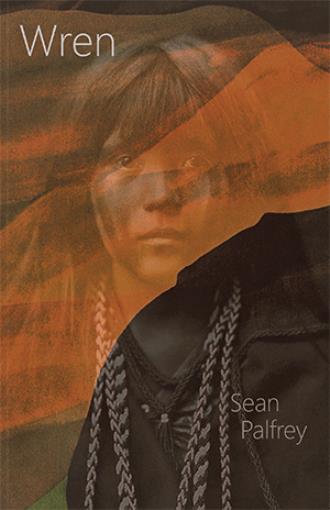
Many centuries ago, two children, Wren and Greymartin, lived with their family in caves in the rugged canyonlands of the North American southwest during a time of serious drought. Wren was badly injured in a fall as an infant and had great difficulty walking and climbing. She was ferociously determined but also skilled at calming and healing people around her, especially with music. Her brother, Greymartin, was a superb climber and hunter but had little patience with his troublesome little sister and only wanted to explore wild places. Faced with life-threatening drought and famine, the family decided to climb out of their canyon to find more water and food. From a legendary traveler they heard of a gathering of tribes in a distant town. Near there in the hills lived a bitter old healer who had hidden an ancient mask which she had used to call for water but recently had refused to help others recover and use it. This is the saga of the family’s difficult life in the canyons and their long and dangerous journey to the meeting and beyond into the Forbidden Lands in search of the healer and the sacred mask.
About the Author
Sean Palfrey is a renowned pediatrician, author, photographer and teacher who has published books and articles on children, medicine, photography and other subjects. For years he has studied, traveled, and extensively explored the canyonlands of the North American southwest where this novel, Wren, takes place.