
Marginalization:
Institutional Inequality and the Replication of Jim Crow In the American Academic System
by
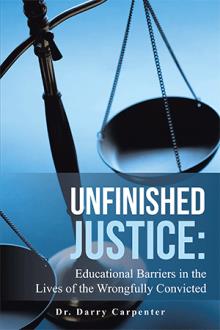
Book Cover & Preview Text

Although the legal framework of Jim Crow has long been dismantled, its ideological remnants persist in contemporary institutions—particularly within the criminal justice system. People who have been exonerated—those wrongly convicted and later found innocent—frequently face ongoing punishment and exclusion despite having their names cleared. Rather than restoring full citizenship, exoneration is often followed by barriers to education, employment, housing, and civic participation that echo the exclusionary practices of the Jim Crow Era. Their legal vindication does not translate into social acceptance; instead, they continue to face suspicion, bureaucratic resistance, and institutional neglect. Marginalization argues that the racial and social control once codified under segregation laws has been reconstituted through modern institutions, including higher education and prisons. As Alexander (2020) contends in The New Jim Crow: Mass Incarceration in the Age of Colorblindness, mass incarceration has evolved into a racial caste system that disproportionately harms communities of color and the poor. Extending that critique, this manuscript examines how wrongful convictions and the absence of reintegration support replicate historical patterns of oppression rooted in the Jim Crow Era. The punitive logic that once justified segregation now appears in policies and practices that restrict access to opportunity, particularly for those who have endured the trauma of wrongful imprisonment. Marginalization: Institutional Inequality and the Replication of Jim Crow in the American Academic System investigates the enduring consequences of wrongful convictions, arguing that exoneration does not mark the end of state-inflicted harm but the beginning of a new cycle of social, economic, and psychological challenges. Grounded in labeling theory, critical race theory, ecological systems perspectives, and research on forensic error, this book demonstrates that exonerees remain entangled in structures of inequality long after their innocence is formally recognized. It shows how stigma, institutional abandonment, and structural barriers converge to produce a multilayered form of marginalization across employment, education, housing, mental health, and community reintegration. A central argument of Marginalization is that wrongful convictions create a form of “civic displacement,” in which exonerees are legally innocent yet socially unanchored. Financial instability emerges as one of the most significant barriers, shaping access to higher education, employment, and long-term stability. These economic impediments reinforce the stigmatizing effects of labeling, limiting exonerees’ ability to rebuild their identities and reclaim full participation in society. The book also highlights the role of forensic failures—misinterpretation, contamination, and overstated testimony—in producing wrongful convictions, situating these errors within broader institutional weaknesses. Ultimately, Marginalization positions wrongful conviction as both a personal tragedy and a systemic failure, calling for reforms that address the interconnected social, economic, and institutional barriers that define exonerees’ post-release lives. By integrating empirical research, narrative accounts, and theoretical analysis, the book offers a multidimensional understanding of wrongful conviction and outlines pathways toward justice, restoration, and societal acceptance. It argues that while overt racial policies may no longer structure exclusion, criminal records and institutional gatekeeping now function as color-blind mechanisms of discrimination, especially within education. The Jim Crow Era constructed a racial hierarchy that profoundly shaped American education. In the decades following Reconstruction, state and local governments enforced segregation across schools, transportation, housing, and other public domains, creating a legally sanctioned system designed to restrict African Americans’ access to educational opportunity. This order was reinforced by Plessy v. Ferguson (1896), which upheld the doctrine of “separate but equal” despite the systematic underfunding, overcrowding, and neglect of Black schools. Educational segregation was therefore not simply separation; it was a deliberate strategy to preserve racial subordination and limit socioeconomic advancement for Black communities. Although de jure segregation ended, contemporary research shows that the institutional architecture of Jim Crow continues to shape educational opportunity through modern policy instruments rather than explicit racial statutes. Fiscal and administrative structures that once sustained segregated schooling—especially property-tax-based funding, racially stratified zoning, and discretionary disciplinary regimes—remain central drivers of unequal access. These mechanisms reproduce patterns of racialized exclusion that echo the order legitimized under Plessy and only partially disrupted by Brown v. Board of Education (1954). Together, critical race theory and labeling theory show how post-secondary institutions reproduce exclusion through ostensibly race-neutral policies. For exonerees, the stigma of wrongful conviction becomes an enduring label that persists even after innocence is legally established. Admissions barriers, criminal record checks, and housing restrictions often treat exonerees as threats rather than students, revealing how educational exclusion has been reconfigured rather than dismantled. Positioning exonerees at the center of this analysis clarifies why confronting these structures remains essential to meaningful reform.
Formats

Book Details
About the Book
In Marginalization, Dr. Darry Carpenter confronts a pressing question: how do institutions meant to expand opportunity continue to reproduce exclusion? His work is grounded in a simple but urgent truth: innocence without access is not justice. Focusing on the American academic system, this book reveals how inequality is not only inherited from the past, but actively sustained through policies, practices, and power structures that echo the logic of Jim Crow. With sharp social critique and historical insight, Carpenter challenges readers to look beyond the language of diversity and ask who is still being pushed to the margins—and why. This is the heart of institutional betrayal: the very institution that promises opportunity becomes the institution that reproduces oppression. Marginalization is both an indictment of structural exclusion and a call to rethink access, fairness, and accountability in higher education.
About the Author
Dr. Darry Carpenter is a justice-centered scholar, educator, and advocate whose work is guided by an unwavering commitment to human dignity and accountability. Writing at the intersection of criminal justice, education, social justice, law, and public policy, he examines wrongful convictions and enduring marginalization. His publications include Obstacles in Education, Unfinished Justice, and Marginalization.