
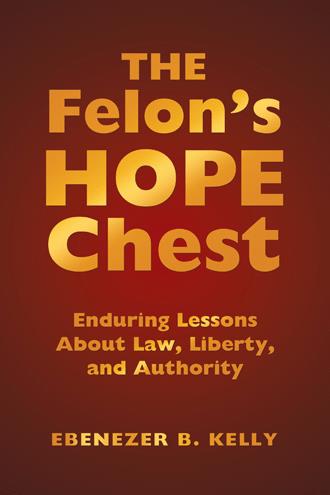
The Felon’s Hope Chest
Enduring Lessons About Law, Liberty, and Authority
by
Book Cover & Preview Text
Clausewitz's thinking was shaped by German Romanticism, the intellectual and artistic movement that dominated German culture in the late eighteenth and early nineteenth centuries. Romanticism emphasized emotion over reason, intuition over calculation, the organic over the mechanical, the particular over the universal. It rejected the Enlightenment's confidence in rational progress and systematic knowledge, insisting instead on the irreducible complexity of human experience and the limits of abstract theory. This philosophical orientation permeates On War, giving it a character quite different from earlier military treatises that attempted to reduce warfare to geometric principles or mechanical rules. The Romantic influence appears most clearly in Clausewitz's insistence that war cannot be understood through abstract principles alone but must be grasped through historical study and practical experience. Theory provides concepts and frameworks, but understanding requires immersion in the concrete particulars of actual campaigns, actual battles, and actual decisions made under conditions of uncertainty and danger. This emphasis on the particular and the concrete reflects the Romantic conviction that reality is richer and more complex than any theoretical system can capture. The general who masters theory but lacks experience will be defeated by the general who combines theoretical knowledge with practical wisdom gained through years of service. Philosophy, in the Romantic understanding, is not merely a set of doctrines but "the message"—a way of seeing the world, a framework for interpreting experience, a set of assumptions about what matters and why. This conception of philosophy as a message rather than a system connects directly to the core framework of this work: ideas shape perception, perception generates emotion, emotion moves will, and the will determines action. The philosophical message operates not through logical demonstration but through persuasion, not through proof but through the gradual transformation of how one sees and understands. Clausewitz absorbed the Romantic message and applied it to warfare, producing a work that is simultaneously analytical and intuitive, systematic, experiential, theoretical, and practical. Former ideas act as law, establishing permission structures and authority that monopolize time and space around the idea. This principle, central to Romantic philosophy, explains how intellectual traditions shape what can be thought and said within a given culture or discipline. The dominant ideas of an era do not merely describe reality; they define what counts as reality, what questions are worth asking, and what answers are acceptable. These ideas establish boundaries—intellectual, social, political—that constrain thought and action. The person who challenges dominant ideas faces resistance not because the ideas are necessarily correct but because they have become embedded in institutions, practices, and habits of thought that resist change. This monopolization of time and space operates through multiple mechanisms. Intellectually, dominant ideas shape education, determining what students learn and how they learn it. Socially, dominant ideas shape conversation, determining what can be said in polite company and what must be whispered or left unsaid. Politically, dominant ideas shape policy, determining which actions are considered legitimate and what actions are considered dangerous or subversive. Economically, dominant ideas shape markets, determining what products are valued and what innovations are funded. The monopoly is never complete—dissenting ideas always exist at the margins—but it is powerful enough to shape the mainstream of thought and action. Clausewitz's work itself became such a dominant idea in military thought. For generations, officers studied On War as the authoritative text on strategy, absorbing its concepts and frameworks, using its language to discuss military problems. This dominance had both benefits and costs. The benefits included a shared intellectual foundation that enabled sophisticated strategic discussion and a recognition of warfare's complexity that prevented simplistic thinking. The costs included a tendency to treat Clausewitz's insights as dogma rather than as starting points for further inquiry, and a neglect of alternative perspectives that might have enriched strategic thought. The monopolization of intellectual space around Clausewitz's ideas demonstrates the very principle he inherited from Romantic philosophy: ideas, once established, shape what can be thought and said, creating both possibilities and constraints. The connection to the broader framework is direct. Ideas move through history not as abstract propositions but as forces that shape institutions, practices, and habits of thought. They establish authority—intellectual, social, political—that must be recognized and either accepted or challenged. They monopolize time by determining the questions each generation considers important and the questions it ignores. They monopolize space by determining what ideas can be expressed publicly and what ideas must remain private or marginal. Understanding this process is essential to understanding how human societies evolve, how knowledge progresses, and how change becomes possible despite the weight of tradition and the resistance of established authority.
Formats

Book Details
About the Book
What if every paradox stems from the same fundamental misunderstanding? Such an explanation could explain why institutions fail over time, why reforms backfi re, and why the brightest minds can’t predict market crashes or military outcomes. From medieval prisons to quantum physics, from Napoleon’s logistics to cryptocurrency, The Felon’s Hope Chest reveals the hidden structure that governs all human action. Once you see the mirror principle at work—how every structure we build to constrain others inevitably constrains us—you can’t unsee it. You’ll gain insights into: • why your organization is failing; • why your strategy won’t work; • what actually needs to change; • why the same forces that built Western civilization are threatening to destroy it. If you’ve ever wondered why the world works the way it does—and why philosophers and economists so often seem to talk past one another— this book offers meaningful insights. It refuses to fragment knowledge into separate disciplines. Instead, it demands integration, challenging you to see power, constraint, and human potential in new ways.
About the Author
Ebenezer B. Kelly is a licensed attorney and accomplished skydiver. He examines unrelated domains (such as warfare, markets, law, institutions, and physics) within a single coherent framework, offering practical insights to address contemporary questions by revealing unchanging principles that govern human motivation and social structure—making abstract philosophy directly applicable to real-world problems.