
Happily Hippie-American
by
Book Cover & Preview Text
Chapter One: This book isn’t nostalgia; it’s not a memoir. Rather, it’s a combination of argument and what I call “popular social science.” It’s writing that attempts to be scientific in its approach (using objective evidence and sometimes consulting scholarly texts), but it isn’t academically stuffy. After this book-by-chapter preview, in the next part of this chapter, I’ll tell you a bit about myself. The introduction’s final section regards writing matters: who I see as my audiences, language issues, even why I’m capitalizing Hippie and Counterculture. In Chapter Two, “Ethnocide in the American Mind: Rumors of our Death are Greatly Exaggerated,” I’m going to take that demeaning cliche, Hippies Were Just a Thing of the 1960s, and show how it’s a socio-political myth constructed by American neoconservatism and the War on Drugs. Hippiedom never died; rather, it became socially invisible, meaning that although everyone at some level knows Hippiedom lives on, publicly we deny its existence, see the subject as unpleasant and impolite. Hippies Were Just a Thing of the 1960s, then, is the ethnocidal wishful thinking of American bigots, nothing more. If this book is about paradigm shift, we begin here. We’re taking that decade-specific paradigm of Hippies, wadding it up and tossing it into the recycle bin. Among other arguments, this chapter undercuts Hippies Were Just a Thing of the 1960s in its assertion of generational transfer; that is, Hippie parents often produce Hippie kids, and sometimes those Hippie kids produce Hippie grandchildren. In addition, I’ll show the reader two crude demographic maps of Hippie-America and, finally, make an estimate the contemporary America is at least ten-percent Hippie-American. Chapter Three, “The Better Lens: Ethnic-Hippies Theory,” begins by demonstrating how our current definitions and paradigms of Hippiedom don’t make sense. The phrase “the 1960s generation,” for instance, doesn’t explain either those of that generation who didn’t go Hippie or the many Hippie-Americans of today born after the 1960s ended, sometimes by several decades. Chapter Four, “Hippie as Ethnic; Counterculture as Ethnicity,” is a deductive (general-to-specifics) proof of Hippie ethnicity; that is, it takes a definition of ethnicity and then proceeds to prove that Hippie culture fits it. We’re going to use the definition of ethnicity/ethnic from The Harvard Encyclopedia of American Ethnic Groups, and then, because that definition neglects certain obvious matters (such as ethnic costume), we’re going to amend it. The chapter opens with an essay refuting the sometime misunderstanding that ethnicity requires racial/biological distinctiveness. Chapter Five, “Waddling Well: What a Relatively Short, In-Many Ways-Typical Trip It’s Been,” is an inductive (specifics to general) proof of Hippie ethnicity. The “waddling” is as in “If it walks like a duck, if it looks like a duck, if it quacks like a duck, it’s probably some kind of duck.” (The rest of the chapter title is a play on the Grateful Dead lyric “What a long, strange trip it’s been.”) So, I’m taking things we see as typical of traditionally recognized racial and ethnic groups and showing how we can see these same things in regard to Hippiedom and how society treats it . . . . At this point, then, I’ll have double proven the ethnic nature of Hippie-America. One question remains: “If Hippiedom is an ethnicity, where did it come from? How did it originate?” Chapter Six, “The Birth of Hippiedom: Stand and be Delivered!” explains Hippiedom’s unusual origins, the ethnogenesis, of Hippie culture. It concludes that Hippie culture is a synthetic ethnic minority: it is synthetic in both how it formed (with the decisive intervention of technology, especially mass media) and in its culturally eclectic content. . . . . Chapter Seven, “God Bless the Freaks: Hippiedom’s Greatest Hits,” is a catalog of the amazing contributions of Hippie culture to this nation and the world. . . . . [This chapter is long and very well-developed.] Chapter Eight, “‘Now, Lay Back on the Couch, Please’: Healing Your Inner Hippie,” deals with the psychological aspects of Hippie identity. Counterculturists have, of course, been subjected to a regimen of social shaming; this chapter discusses the attitudes that keep some in the “Countercultural closet” and a healthy alternative to them: Hippie pride. Chapter Nine, “Drug Laws and Hippie-America—We Are Not Criminals: We’re a People Criminalized,” is EHT applied to the prohibition of marijuana and other drugs. It is history that demonstrates how the true purpose of American drug laws has been to persecute minorities and that today’s drug laws persecuting Hippie-America are more of the same. I’ll point out that there is no correlation between drug laws and the extent to which people use or abuse a drug, neutralizing the protecting-the-public-health argument that is the mainstay of the War on Drugs since persecuting a drug doesn’t curtail use. I’ll prove Gateway is illogical and ridiculous, an argumentative embarrassment. We’ll see how War on Drugs pseudo-science is biased and silly. I’ll cover some health-related issues and show how Hippie-America is the driving force behind today’s Legalization Movement. Chapter Ten, “A Problem’s Solution: Building a Hippie-American Ethnic Organization,” sketches out what a Hippie-American ethnic organization (HAEO) might look like and a relatively simple plan for starting one. . . . Chapter Eleven, “The End of a Book, the Start of an Organization,” summarizes this book and ends with a call to organize.
Formats

Book Details
About the Book
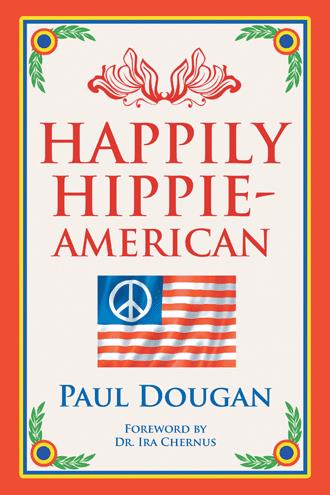
With a bold new perspective–an ethnic perspective–Happily Hippie-American rethinks Hippies and explains how Hippie culture didn't die with the 1960s; rather, it exists today as a thriving ethnicity (albeit one with unusual origins). And Hippie parents are often having Hippie kids and grandkids—generational transfer. Probably, then, over ten percent of America is Hippie-American, from toddlers to seniors—over 30 million people. Incidentally, Ethnic-Hippies Theory (EHT) argues that there is no “Hippie philosophy.” There are only Countercultural values. Hippiedom has been a boon to humanity; among other things, we invented the Personal Computer. We helped bring down the Iron Curtain. We created the natural/organic-foods and "adventure-gear” industries. We’ve made great strides in healing and in the greening of America. We star in Hollywood--everyone from Jennifer Aniston to Woody Harrelson to Shailene Woodley to Quentin Tarantino. We are the driving force behind today's highly successful Legalization (of cannabis) Movement. In fact, we’re so accomplished that if Hippiedom were an individual, we would call that person "the genius of the age." Still,, we suffer from stereotyping, "social invisibility" and a possible lack of cultural self-confidence. We’ve been targeted by neoconservatism and its War on Drugs, and we exist as an oppressed minority of disrespected, second-class citizens. We need our own civil-rights organization—make us visible, make us respectable. Happily Hippie-American suggests how we might do that—for the good of ourselves, the larger nation and this beautiful world.
About the Author
Paul Dougan is a Boulder, CO based teacher, writer and activist looking for those interested in building a Hippie-American ethnic organization. Please visit HappilyHippie.org.