
The First Forty-Eight
Perseverance, Faith, and the Making of a Legacy
by
Book Cover & Preview Text
Leaving Home to Learn
The acceptance letter from Washington University in St. Louis arrived in a plain envelope that did not match the weight it carried. Inside were just a few sheets of paper, but for a girl from Sherman Park, it might as well have been a boarding pass to another world. My parents held that letter like it was fragile glass. They had always expected me to go to college; seeing the proof in black and white made the dream feel both real and terrifying.
Milwaukee Lutheran had prepared me academically—a Christ-centered, college prep environment where teachers pushed critical thinking, writing, and leadership. But there is no handbook for what it feels like to leave a city where most people look like you and land on a campus where you are suddenly one of a few Black girls in certain spaces.
Leaving Sherman Park was not just about geography; it was about identity. On move-in day, we packed the car until it looked like the trunk might not close. My mother tucked snacks and cleaning supplies into every spare corner, as if she could protect me from homesickness with Lysol and Little Debbie cakes. My father said, “If you get the chance, go. Don’t let fear keep you small.”
Washington University has a long history in quality education, but at eighteen, I did not care about timelines or endowments; I cared about surviving in a place that felt like a different planet. The campus was beautiful—red brick, manicured lawns, buildings that looked like they had been plucked out of a movie. The first thing I noticed, though, was how quiet it was compared to home. No kids riding bikes in the street. No aunties yelling across porches. No one asking if I was alright. I suddenly understood what people meant by “culture shock.”
In classrooms, I found myself sitting next to students whose parents were lawyers, doctors, executives—people who talked about internships the way kids back home talked about summer jobs at the mall. They debated policy issues they had only read about; I carried memories of those issues in the faces of neighbors and kids I had grown up with. When professors spoke about “urban communities” as abstract concepts, I heard Sherman Park in every example and had to decide how much of myself to bring into the conversation.
There was pride in being “the smart one,” the girl who had made it out and into a prestigious university. There was also a loneliness that the brochures never mentioned.
Phone calls home became lifelines. My mother wanted every detail: the classes, the campus, whether I had found a church. I told her about lecture halls and study groups, leaving out the parts where I felt like an imposter in certain spaces. At night in my dorm room, I would sit by the window and wonder how the girls back home—girls just as bright, just as determined—were doing in schools that rarely had enough of anything.
Choosing psychology as my major felt natural. I had always been fascinated by why people do what they do, how they survive what they survive. The more I learned, the more I saw my neighborhood’s stories in the textbook case studies—trauma responses, attachment issues, survival behaviors misread as defiance. It was both validating and enraging to realize that what we had lived through now had names, theories, and treatment plans that many of us had never been offered.
Washington University expanded my world. I met students from across the country and abroad, encountered new ideas about race, class, and global justice, and began to see social work not just as charity but as a vehicle for structural change. Yet with every new perspective, the tether to Milwaukee tightened. The more I learned, the more responsible I felt to bring that knowledge back home.
Money was always on my mind. Even with financial aid and scholarships, there were semesters where the numbers barely worked. I juggled work-study jobs and part-time work, learning to stretch dollars the way my mother had stretched dinners. I saw classmates whose families wired them money without a second thought, and I swallowed my envy, reminding myself that my presence on that campus was not a mistake; it was an investment.
Spiritually, I had to rebuild. Church at home had been automatic; in St. Louis, it required intention. I visited different congregations, searching for a place that felt like Mt. Calvary—where the preaching was rooted in scripture and the choir sang beautifully. Finding a church reminded me that no matter how far I traveled, my faith was a portable home. It steadied me when exams piled up, when microaggressions in class cut deep, when the distance from Sherman Park felt unbearable.
By the time I completed my BA in 1999 and moved straight into the Master of Social Work (MSW) program, I was no longer just a girl from Milwaukee “trying college out.” I was a Black woman consciously choosing social work as my lane. I had seen too much—both in my neighborhood and in my field placements—to pretend that any other path would satisfy me.
Graduate school at the Brown School sharpened my focus. The MSW program demanded more of everything: more reading, more field hours, more emotional labor. Placements took me into agencies, schools, and community programs that mirrored and differed from the ones I knew back home. I learned the language of assessments, treatment plans, and evidence-based practice. I also learned how easy it was for systems to become more invested in paperwork than in people.
In seminar rooms, we debated best practices; in fieldwork, I watched what happened when “best practices” met underfunded agencies and overworked staff. The dissonance between theory and reality lodged itself in my chest. I knew I wanted to be the kind of social worker who could speak both languages—the clinical and the lived, the policy and the pew.
During these years, the question that had followed me from Sherman Park grew louder: What are you going to do with all of this?
By the time I walked across the stage with my MSW in 2001, I had my answer, even if I could not yet see the full picture. I would go back home. I would work with kids and families who looked like mine. I would take everything I had learned in St. Louis—every theory, every intervention, every piece of research—and translate it into something that mattered on real blocks in real time.
I did not yet know that this commitment would lead me to start a nonprofit, direct group homes, and eventually earn a PhD focused on young women aging out of foster care. At that moment, I simply knew this: Leaving home to learn had never been about escaping Milwaukee. It had always been about arming myself to fight for it.
There is a particular kind of tension in being “the one who got out.” Communities sometimes place you on a pedestal you never asked for, while institutions invite you in as proof of their diversity. In the early 2000s, with a newly minted MSW, I stood with one foot in Sherman Park and one foot in spaces that had historically excluded people like me. Learning to balance that tension—without losing myself on either side—would become one of the defining tasks of my first forty-eight years.
Formats



Book Details
About the Book
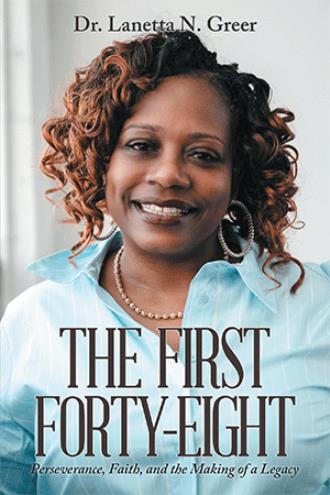
The First Forty-Eight: Perseverance, Faith, and the Making of a Legacy traces Dr. Lanetta N. Greer’s journey from her family home in Milwaukee’s Sherman Park to lecture halls, courtrooms, and the founding of Home 4 the Heart, a group home for girls in foster care. Born and raised in a neighborhood marked by both community and violence, Greer learns early to read systems, sirens, and silence. Across these first forty-eight years, she becomes a social worker, professor, researcher, and nonprofit founder, pursuing a PhD focused on young women who “age out” of out-of-home care even as she is building a refuge for them on the very block that raised her. Part memoir, part field report from the front lines of foster care, The First Forty-Eight speaks to tired caregivers, overextended leaders, and anyone who has tried to turn personal grief into public good. It is a testimony to what God can do with broken places, stubborn faith, and a girl who refuses to stop showing up.
About the Author
Dr. Lanetta N. Greer is a social worker, researcher, and director of Home 4 the Heart, Inc., a Milwaukee-based residential program serving girls in out-of-home care. A graduate of Washington University in St. Louis (BA, MSW) and the University of Wisconsin–Milwaukee (PhD in education), she has spent decades working at the intersection of foster care, youth homelessness, and community-based ministry. Dr. Greer is the author of Aged Out: Narratives of Young Women Who Grew Up in Out-of-Home Care, a qualitative study used by educators, social workers, caregivers, and juvenile justice professionals nationwide. Through writing, teaching, and speaking, she equips caregivers, leaders, and systems to see and serve young people more justly. She lives in Wisconsin with her family and continues to lead Home 4 the Heart as it expands services for girls and young women in transition.